




Ductless Air Conditioner: Cool Choices 2025
Why Ductless Air Conditioners Are Perfect for Modern Homes
A ductless air conditioner offers homeowners an efficient cooling solution without the need for extensive ductwork. Here’s what you need to know:
Key Features:
- No Ductwork Required – Perfect for older homes or new additions
- Individual Zone Control – Cool only the rooms you’re using
- Energy Efficient – Up to 30% more efficient than traditional systems
- Quiet Operation – Indoor units run nearly silent
- Year-Round Comfort – Heat pump models provide both heating and cooling
How It Works:
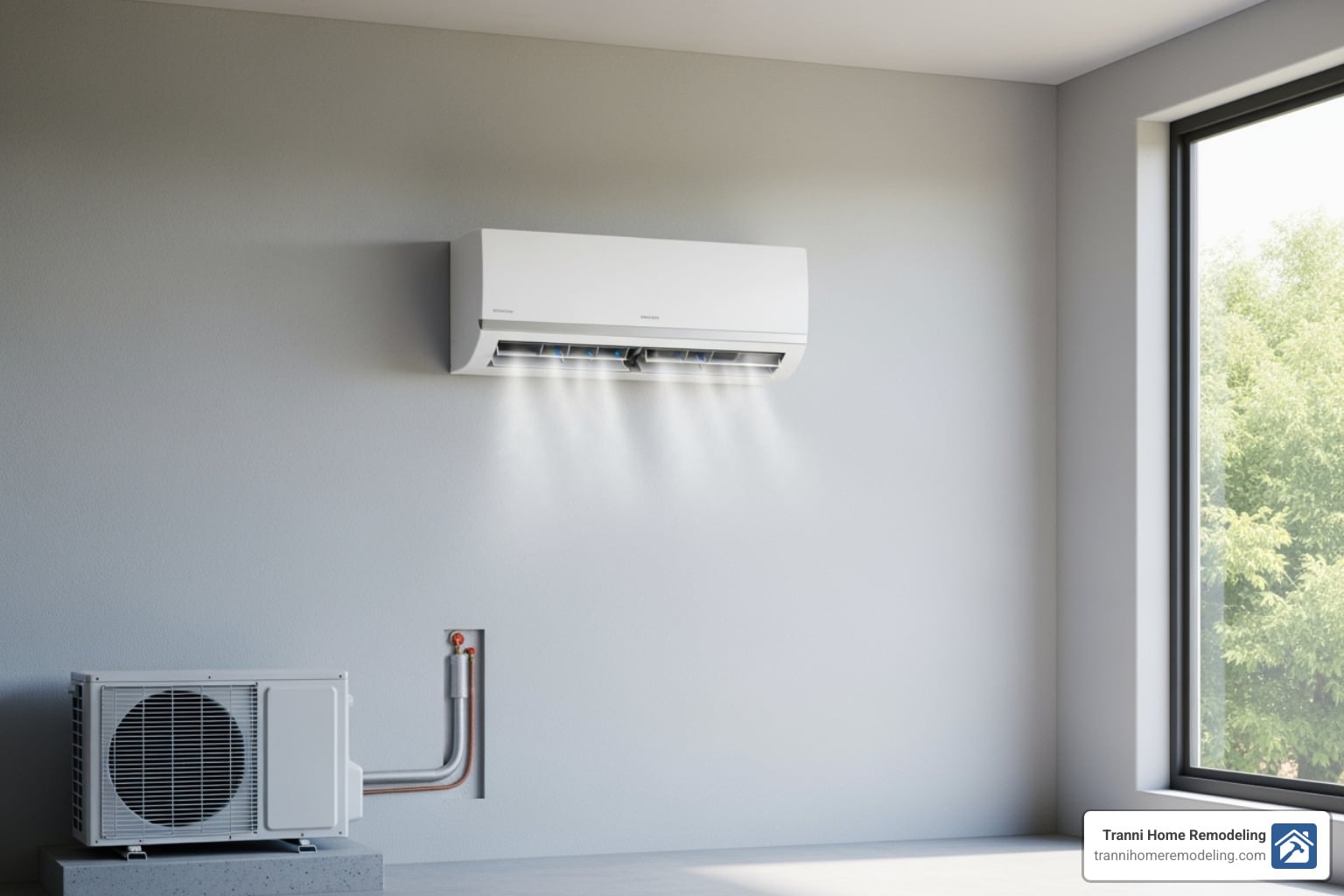
A ductless system consists of an outdoor compressor unit connected to one or more indoor air handlers through a small conduit. The indoor units mount on walls, ceilings, or floors to deliver targeted cooling exactly where you need it.
Best For:
- Homes without existing ductwork
- Room additions and converted spaces
- Supplementing existing HVAC systems
- Creating comfortable zones in hard-to-cool areas
The U.S. Department of Energy reports that duct losses can account for more than 30% of energy consumption in traditional air conditioning systems. Ductless systems eliminate this waste entirely.
As Tyler Tranni, owner of Tranni Home Remodeling, I’ve helped countless Billerica homeowners upgrade to ductless air conditioner systems that provide superior comfort and energy savings. My experience with HVAC installations has shown me how these systems transform both comfort levels and monthly energy bills for busy homeowners.
Ductless air conditioner vocabulary:
Understanding the Ductless Air Conditioner: How It Works
A ductless air conditioner, also known as a mini-split system, offers a smart and efficient alternative to traditional central air. Unlike systems that use a maze of ducts, a ductless unit operates without them, which is the source of its unique advantages.
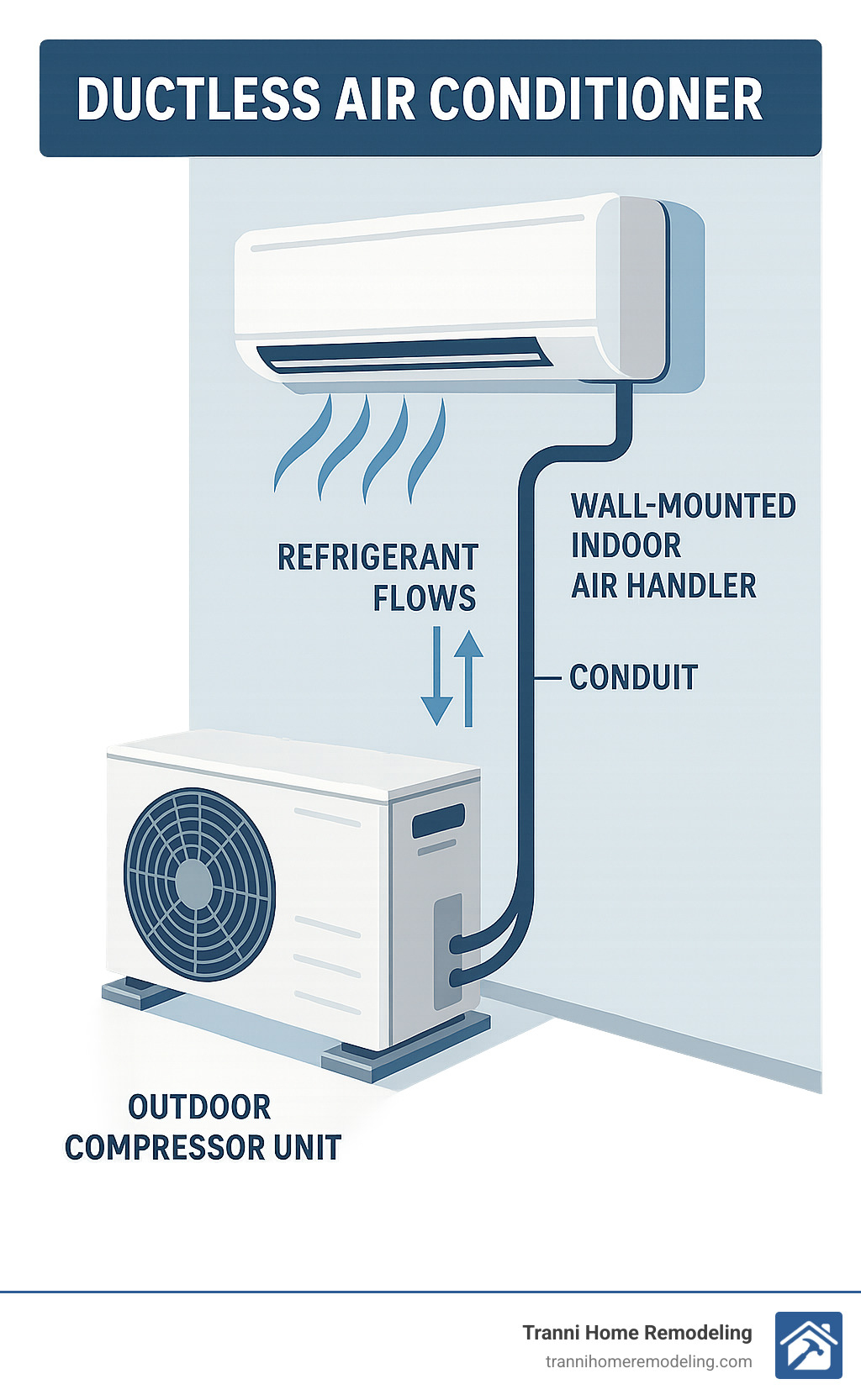
A ductless air conditioner has two main components: an outdoor compressor and one or more indoor air handlers. The indoor units can be mounted on a wall, ceiling, or floor. A small conduit connects the indoor and outdoor units, housing the refrigerant lines, electrical wires, and a condensate drain. The cooling process is a continuous cycle: the indoor unit pulls in warm air, which passes over a cold coil. The refrigerant inside absorbs the heat and travels to the outdoor unit, where the heat is released. The cooled refrigerant then cycles back indoors to repeat the process, efficiently delivering cool air directly where you need it.
For a closer look at the components and how they work together, take a peek at our handy infographic above. And if you’re curious for even more details on how these systems operate, you can always explore More info about our Ductless HVAC System.
The Core Difference from Traditional Central Air
The primary difference from central air is the absence of ducts. Traditional systems can lose over 30% of their cooling energy through leaky or poorly insulated ductwork, according to the U.S. Department of Energy. A ductless air conditioner eliminates this waste by delivering conditioned air directly into a room, making it highly energy-efficient.
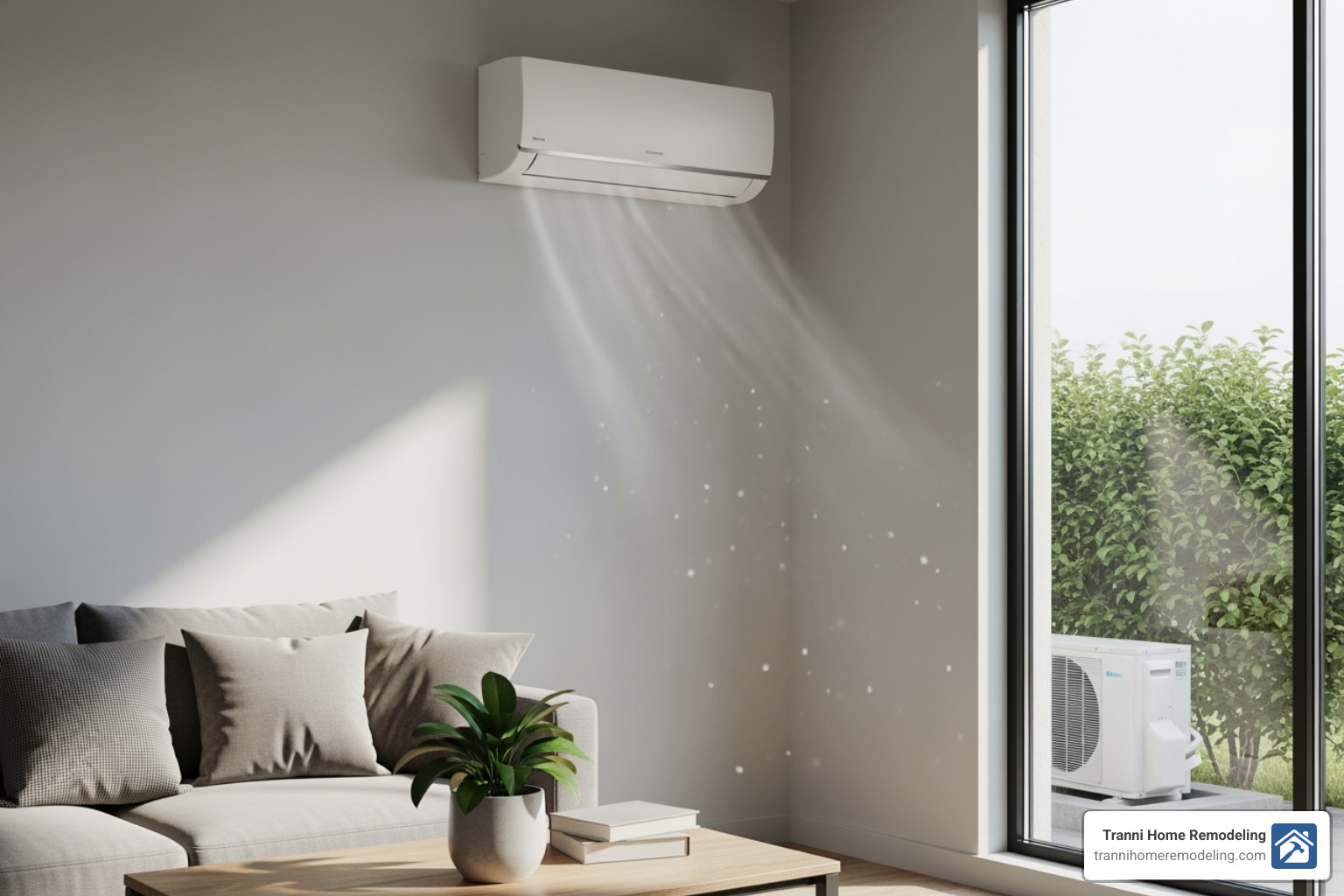
This design also allows for zoned temperature control. Each indoor unit has its own thermostat, so you can cool your living room during the day while keeping unused bedrooms warmer, saving energy and personalizing comfort. This is a significant advantage for homes in Billerica, Lowell, and Chelmsford.
Furthermore, installation is far more flexible and less disruptive than a central system, as it doesn’t require installing bulky ductwork. This makes it ideal for older homes or new additions.
Can a Ductless Air Conditioner Also Provide Heat?
Yes, many ductless air conditioner models are also powerful heat pumps, providing both cooling in the summer and heating in the winter. This dual function is possible thanks to a reversing valve that changes the flow of refrigerant. In heating mode, the system extracts heat from the outdoor air (even in cold weather) and transfers it inside. This creates an efficient, all-in-one climate control solution for year-round comfort, eliminating the need for separate systems.
If you’re looking for a comprehensive solution for your home, be sure to check out our Ductless Air Conditioner with Heater options or explore the full capabilities of a Ductless Heat Pump System.
Key Advantages and Potential Drawbacks
Every home comfort solution comes with its unique set of pros and cons, and the ductless air conditioner is no exception. We’ve seen the transformative impact these systems have on homes across Billerica, Chelmsford, and surrounding Middlesex County communities, but it’s important to weigh all factors before making a decision. Like any big upgrade, it’s about finding the perfect fit for your family and your home’s needs.
Here’s a quick look at the main points to consider, keeping in mind that the long-term benefits often outweigh the initial concerns:
| Feature | Pros of Ductless AC | Cons to Consider |
|---|---|---|
| Energy Efficiency | Eliminates duct losses and uses inverter technology for precise output, translating to lower utility bills | Higher upfront equipment cost compared to window units |
| Zoned Comfort | Individual room thermostats let you heat or cool only occupied spaces | Multiple indoor heads mean more components to control and clean |
| Installation | No bulky ductwork and minimal disruption to existing finishes—ideal for older homes or new additions | Indoor units remain visible and may not match every décor style |
| Flexibility | Perfect for basements, attics, sunrooms, and home additions where running ducts is impractical | Whole-home coverage may require several zones, increasing total system price |
| Air Quality | Multi-stage filtration captures dust, allergens, and odors for cleaner indoor air | Filters must be removed and cleaned about once a month to maintain performance |
| Quiet Operation | Whisper-quiet indoor heads and an outdoor unit located away from living spaces | Outdoor unit placement must follow clearance rules for proper airflow |
| Year-Round Use | Heat-pump models provide efficient heating even in cold Massachusetts winters | Heating capacity drops in extremely low temperatures, so supplemental heat may be needed |
Top Benefits of Going Ductless
- Energy Efficiency – No duct losses and smart inverter compressors significantly reduce energy usage.
- Flexible Zoning – Tailor comfort room-by-room and avoid conditioning unused spaces.
- Quick, Low-Impact Installation – A small, three-inch conduit hole is all that’s needed, preserving walls and ceilings.
- Quiet Performance – Indoor units operate at sound levels as low as 19 dB, quieter than a whisper.
For more details on maximizing comfort with a mini-split, explore our Mini Split Heating and Cooling System guide.
What to Consider Before You Buy
While the benefits are compelling, remember these potential drawbacks:
- Upfront costs are higher than window units (though often offset by energy savings and rebates).
- Indoor heads are visible; placement and décor coordination matter.
- Filters need regular cleaning, and annual professional maintenance is essential.
- Extremely large homes may still rely on supplemental systems for peak-season loads.
Need help deciding if ductless is right for your Middlesex County home? Check out The Pros and Cons of a Ductless Heating and Cooling System or contact Tranni Home Remodeling for a personalized assessment.
How to Choose the Right System for Your Home
Choosing the right ductless air conditioner is crucial for comfort and efficiency. A system that is too small will struggle to cool your home, while one that is too large will waste energy. At Tranni Home Remodeling, we help homeowners in Billerica, Lowell, and surrounding areas select the perfect system by assessing several factors: room size and layout, ceiling height, insulation quality, window and door exposure, local climate, heat-generating appliances, and the number of occupants.
To ensure your ductless air conditioner is perfectly matched to your home, we perform a professional load calculation. This detailed analysis guarantees optimal comfort, efficiency, and performance. Ready to learn more about how we keep homes cozy all year? Check out our approach to Heating and Cooling.
Sizing Your Ductless AC Unit Correctly
Correctly sizing your ductless air conditioner is critical. An undersized unit will run constantly without effectively cooling your space. An oversized unit is even more problematic; it will “short-cycle” by cooling the room too quickly and shutting off, leading to wasted energy, temperature fluctuations, and increased wear on the system, potentially shortening its lifespan.
The power of a ductless air conditioner is measured in BTUs (British Thermal Units). While a professional assessment is key, here are some general ideas about how many BTUs you might need based on square footage:
- 6,000 BTUs: Great for smaller spaces, around 250 square feet.
- 9,000 BTUs: Good for rooms roughly 350-400 square feet.
- 12,000 BTUs: Perfect for rooms between 400 to 650 square feet.
- 18,000 BTUs: Works well for larger areas, from 600 to 1000 square feet.
- 24,000 BTUs: Can handle spaces from 800 to 1300 square feet.
- 36,000 BTUs: Designed for big rooms, up to 1,500 total square feet.
These are just starting points. Factors like how well your home is insulated, the type of windows you have, and even your ceiling height will fine-tune the exact BTU needed. That’s precisely why having a professional from Tranni Home Remodeling come out is so valuable – we make sure you get the perfect match. Want to dive deeper into sizing? You can explore How Many Square Feet Can A Ductless Air Conditioner Cool? and get more general information on our Mini Split AC Unit page.
Types of Indoor Units and Their Applications
A key advantage of a ductless air conditioner is the variety of available indoor unit styles, allowing for a seamless blend with your home’s decor and layout. The most common types include:
- Wall-Mounted Units: Installed high on a wall, these are the most popular type due to their efficiency and ease of installation. They are ideal for bedrooms, living rooms, and home additions.
- Floor-Mounted Units: These units sit low on the wall, similar to a radiator, making them a great option for rooms with limited upper wall space, such as sunrooms or basements.
- Ceiling Cassettes: Recessed into the ceiling with only a discreet grille visible, these are perfect for a minimalist look. They provide even, four-way airflow, making them ideal for large, open spaces like kitchens or living rooms.
- Horizontal-Ducted Units (Concealed Duct Units): Completely concealed within a ceiling or wall, these units use minimal ductwork to deliver air through traditional vents. This option provides the benefits of a ductless air conditioner with a conventional appearance.
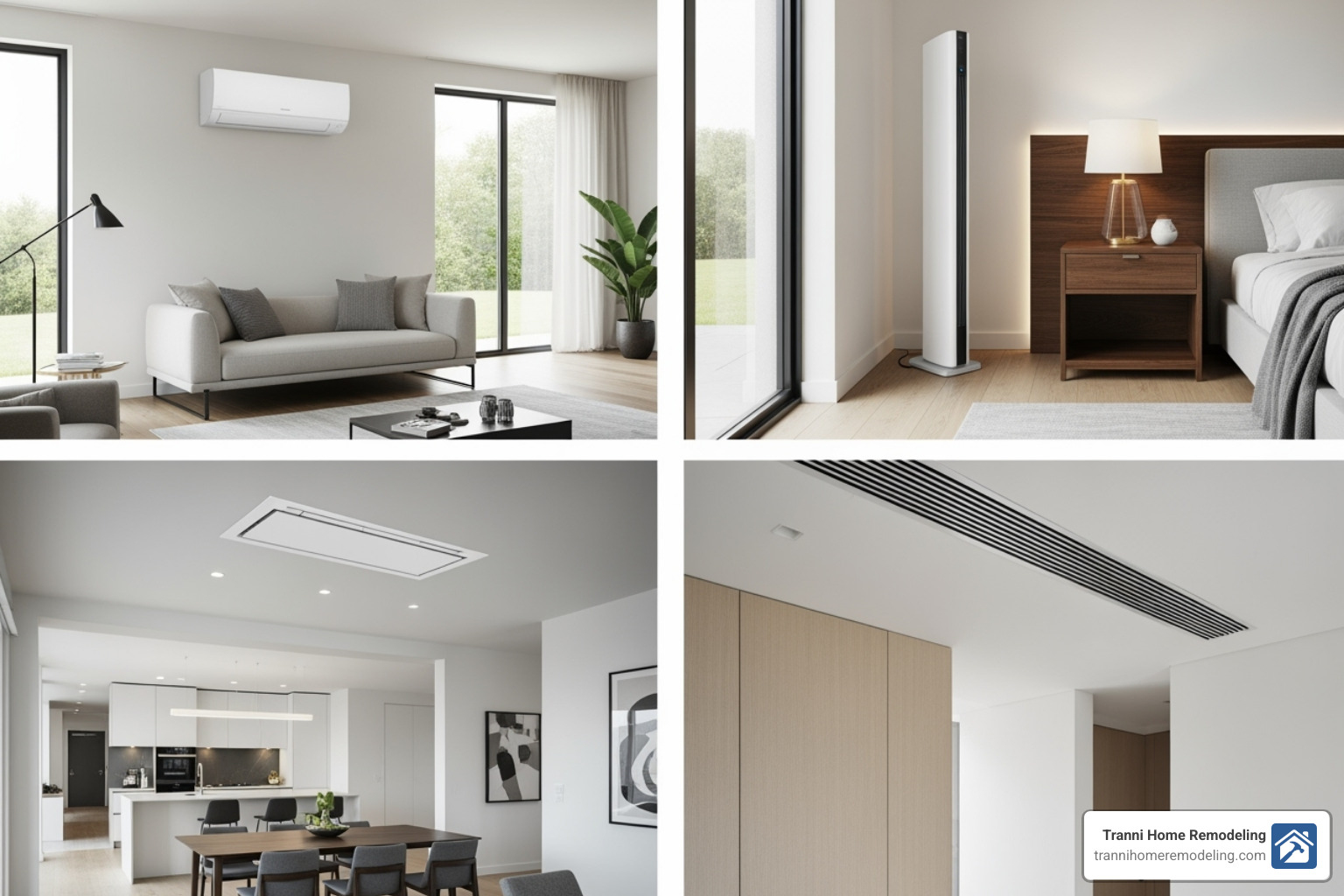
We love working with our clients to figure out the best fit for their home. We want to make sure your system performs perfectly and looks great in your space.
Advanced Features to Look For
Modern ductless air conditioner systems offer advanced features for improved comfort, convenience, and efficiency:
- Smart Home Integration and Wi-Fi Control: Control your system remotely via a smartphone app or voice assistants like Google Assistant and Amazon Alexa. You can cool your Billerica home before you even arrive!
- Advanced Filtration and Air Purification: Multi-stage filters capture dust, allergens, bacteria, and odors, significantly improving your indoor air quality.
- Dehumidification Modes: These modes remove excess moisture from the air, making your home feel cooler and more comfortable during humid Massachusetts summers, often while saving energy.
- Inverter-Driven Compressors: This technology allows the compressor to adjust its speed instead of simply switching on and off. The result is more consistent temperatures, quieter operation, and greater energy savings.
- Sleep Modes: These modes automatically adjust the temperature and fan speed for optimal comfort and energy savings while you sleep.
All these smart features truly make your living environment more comfortable, convenient, and energy-smart. To learn more about how these technologies fit into your home’s overall climate control, dive into More on Heating, Ventilation, and Air Conditioning.
Installation, Cost, and Maintenance Essentials
Once you’ve decided that a ductless air conditioner is the right fit for your home, the next steps involve professional installation, understanding the investment, and learning how to maintain your new system for years to come.
What Does a Ductless Air Conditioner Installation Involve?
Installing a ductless air conditioner is significantly less invasive than installing a traditional central HVAC system. The process is clean, efficient, and minimally disruptive, requiring no major renovations or demolition for ductwork.
The installation process involves several key steps. First, our team mounts the indoor unit(s) in optimal locations. Next, we drill a small conduit hole (about three inches) through an exterior wall to connect the indoor and outdoor units. This conduit houses the refrigerant lines, electrical wiring, and condensate drain. We then position the outdoor unit on a stable pad or bracket. After connecting the lines and electrical wiring, we perform a vacuum and charge of the refrigerant lines and test the entire system to ensure it operates perfectly and without leaks.
While the installation is less invasive, it’s crucial that a certified HVAC technician handles the job. Proper sizing, refrigerant handling, and electrical connections are vital for your system’s efficiency, lifespan, and warranty. Our Tranni Home Remodeling team ensures every installation meets the highest standards. To learn more about our approach, visit our Ductless AC Unit Installation page. If you’re ready to find an expert, we’re here to help you Find an Air Conditioner Installer Near Me.
Understanding the Costs and Available Incentives
The investment for a ductless air conditioner varies based on several key factors:
- Number of Indoor Units (Zones): A single-zone system for one room will be less expensive than a multi-zone setup with several indoor units.
- System Capacity and Efficiency: Larger units with higher BTU capacities and SEER (Seasonal Energy Efficiency Ratio) ratings typically have a higher upfront cost but lead to greater long-term energy savings.
- Installation Complexity: The distance between units, the difficulty of routing lines, and specific electrical needs can influence labor costs.
- Brand and Features: Premium brands and units with advanced features like Wi-Fi control or superior air filtration will be at the higher end of the price spectrum.
Based on general industry data, the cost for a single-zone ductless air conditioner can start around $2,000, while complex, multi-zone systems can reach $15,000 or more. Please note: these are not actual costs for Tranni Home Remodeling, but general industry averages to provide a baseline. While the upfront cost may be higher than a window unit or even a central air system (before factoring in new ductwork), the long-term energy savings and zoned comfort often make it a worthwhile investment.
Great news! Installing an energy-efficient ductless air conditioner can often qualify you for significant savings:
- Federal Tax Credits: Homeowners may be eligible for a federal tax credit of up to $2,000 for installing highly efficient systems.
- State and Local Utility Rebates: Many local utility companies offer rebate programs for high-efficiency equipment. We recommend clients in Billerica, Lowell, and surrounding areas check with their providers for available savings.
For the most up-to-date information on incentives, a great resource is the Information on rebates from ENERGY STAR® website.
Essential Maintenance for Longevity
Regular maintenance is key to ensuring your ductless air conditioner runs efficiently and lasts for years. It helps maintain peak performance, clean air quality, and prevents costly breakdowns. Key maintenance tasks include:
- Clean or Replace Air Filters: This is the most important task. Clean the washable filters in your indoor units monthly to ensure proper airflow and efficiency. Clogged filters can cause the system to work harder and even freeze up.
- Keep Units Clean: Periodically wipe down the indoor units to prevent dust buildup. For the outdoor unit, ensure it is free of leaves, grass, and other debris, maintaining at least two feet of clearance for airflow.
- Check Condensate Drains: Ensure the drain lines that remove moisture are clear of clogs to prevent water backups and potential leaks.
- Schedule Professional Annual Tune-ups: While homeowner maintenance is important, a professional tune-up is essential. A certified technician will perform a deep clean, check refrigerant levels, inspect electrical connections, and identify potential issues before they become major problems. This proactive approach ensures your ductless air conditioner operates at its peak performance. For expert professional assistance, explore our comprehensive Air Conditioning Services Near Me.
Conclusion: Is a Ductless System Your Coolest Choice?
After exploring the ins and outs of the ductless air conditioner, we hope you have a clearer picture of why these systems are becoming such a popular choice for homeowners. Their ability to deliver targeted, efficient cooling and heating without the hassle of ductwork makes them a truly flexible and powerful solution.
To recap, the benefits are compelling:
- Best Energy Savings: By eliminating duct losses and utilizing advanced inverter technology, a ductless air conditioner can significantly reduce your energy consumption and lower your utility bills.
- Personalized Comfort with Zoning: Enjoy precise temperature control in individual rooms, allowing everyone in your home to be comfortable without wasting energy on unoccupied spaces.
- Quiet Operation: Experience a peaceful indoor environment with indoor units that run whisper-quiet.
- Versatile Applications: They are ideal for a wide range of scenarios, from providing climate control in older homes without existing ductwork to perfectly conditioning new additions, converted attics, or finished basements.
- Year-Round Comfort: As heat pumps, many ductless systems offer both efficient cooling in summer and effective heating in winter, providing a comprehensive climate solution.
At Tranni Home Remodeling, we’ve seen how a well-installed ductless air conditioner transforms homes in Billerica, Lowell, Chelmsford, Burlington, and nearby communities. Our decade-plus of experience in home additions, kitchen remodeling, and general home renovation gives us a unique perspective on integrating these systems seamlessly into your living space, ensuring high-quality craftsmanship and outstanding service.
If you’re tired of uneven temperatures, high energy bills, or simply want to explore a modern, efficient climate control solution for your home, a ductless air conditioner might just be your coolest choice. For a professional assessment and expert AC Installation in your area, contact our team today. We’re here to help you make the right choice for your home and ensure your comfort for years to come.
Ready to take the next step? Get a quote for our HVAC Installation Services and let’s discuss how a ductless air conditioner can bring unparalleled comfort and efficiency to your home.