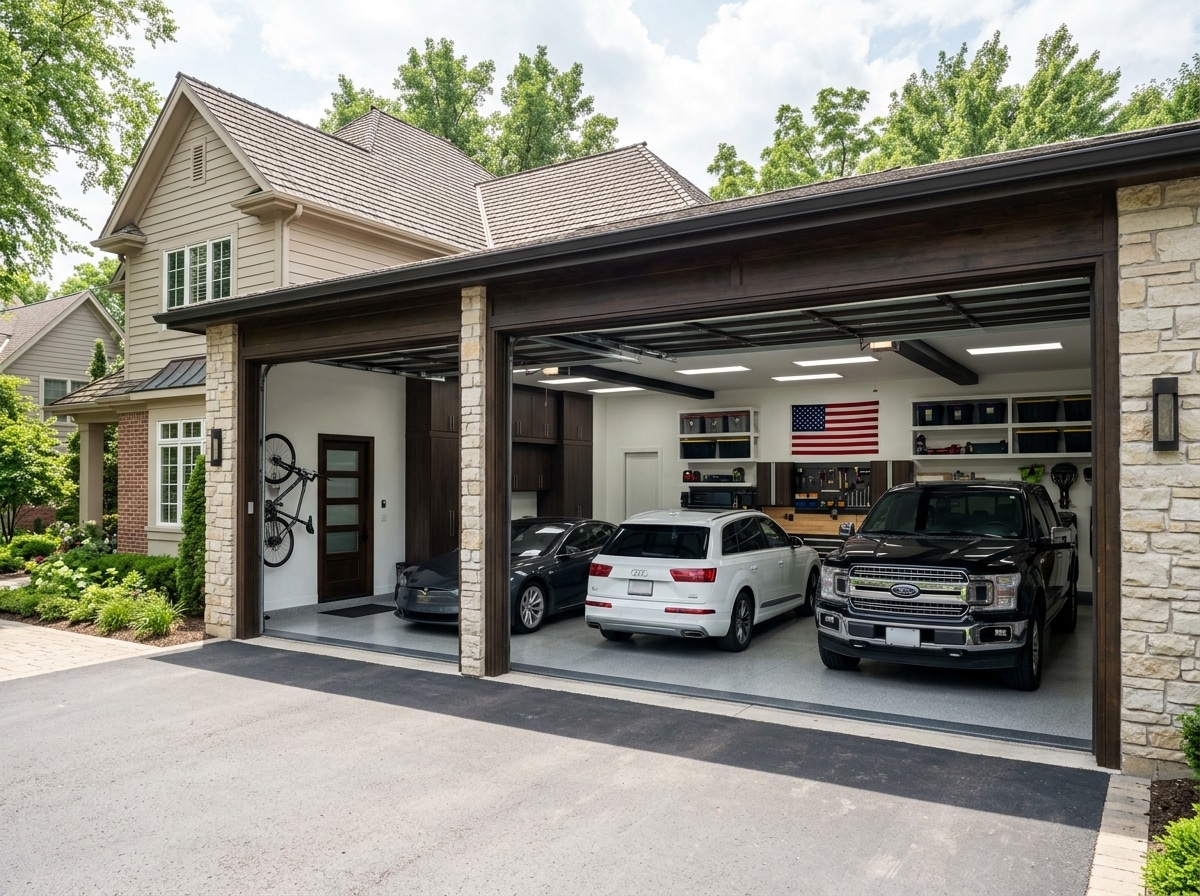





How Much Does a 3-Car Garage Really Cost?
3 car garage cost can vary widely depending on size, materials, location, and finish level. Here’s a quick snapshot of what homeowners typically see based on internet averages:
| Build Type | Average Cost Range |
|---|---|
| Basic attached | $30,000 – $65,000 |
| Mid-range detached | $65,000 – $100,000 |
| Premium/custom build | $100,000 – $160,000+ |
- Size: Most 3-car garages run 30-36 ft wide by 20-24 ft deep (600-900 sq ft)
- Cost per sq ft: Roughly $35-$100+ depending on finish and location
- Biggest cost drivers: Foundation, framing, electrical upgrades, and interior finish level
Note: These are average costs based on internet data and do not reflect actual pricing from Tranni Home Remodeling.
A 3-car garage is one of those home additions that sounds simple on paper but gets complicated fast. You’re not just adding square footage — you’re coordinating foundations, permits, framing, electrical, roofing, and doors, all at once. For homeowners in Billerica and across Middlesex County, the numbers can feel overwhelming before the first shovel hits the ground.
That’s exactly why a clear code breakdown matters before you commit to anything.
I’m Tyler Tranni, owner of Tranni Home Remodeling in Billerica, MA, and I’ve spent years helping homeowners plan and execute garage additions that fit their budget and their property. In this guide, I’ll walk you through everything that shapes 3 car garage cost so you can plan with confidence.

Similar topics to 3 car garage cost:
Breaking Down the 3 car garage cost

When we look at the 3 car garage cost, we have to view it through the lens of a complete construction project. Based on current internet data, the national average construction cost for a 3-car garage typically falls between $28,200 and $52,400 for basic structures. However, in high-cost areas like Middlesex County—including towns like Billerica, Winchester, and Reading—those numbers often shift significantly.
A realistic price spectrum for a fully realized project ranges from $30,000 for a very basic attached shell to $160,000+ for a premium, detached custom build with a second story or high-end finishes. It is important to note that these figures are averages based on broad internet research and are not actual quotes from us at Tranni Home Remodeling.
Every build must adhere to the International Residential Code (IRC) standards, which dictate everything from structural integrity to fire safety. For more context on how these structures come together, you can explore our overview of garage additions.
Comparison of 3-Car Garage Build Levels
| Feature | Basic Build | Mid-Range Build | Premium Custom |
|---|---|---|---|
| Foundation | Standard Monolithic Slab | Reinforced Slab w/ Drainage | Full Perimeter Footings |
| Framing | Standard Wood Studs | Upgraded Sheathing | Steel or Post-Frame |
| Electrical | Basic Lighting/1 Outlet | 200A Subpanel/EV Ready | Full Workshop Power/HVAC |
| Doors | Non-insulated Steel | Insulated Carriage Style | Custom Wood/Smart Tech |
| Internet Avg. Cost | $30,000 – $55,000 | $60,000 – $95,000 | $100,000 – $160,000+ |
How Dimensions Impact the 3 car garage cost
The physical footprint is the most immediate factor in your budget. A standard 3-car garage usually measures between 30 to 36 feet wide and 20 to 24 feet deep. This creates a square footage range of roughly 600 to 900 square feet.
If you own larger vehicles, like full-sized SUVs or trucks common in Andover or Reading, you may need a 36×24 layout to allow for comfortable door clearance. Increasing the ceiling height from the standard 8 feet to 10 or 12 feet for car lifts or overhead storage also adds to the material costs for framing and siding. For a deeper dive into sizing, check out our ultimate-3rd-car-garage-addition-guide.
Comparing the 3 car garage cost for different styles
Style dictates complexity. A custom stick-built garage is designed to match your home’s existing architecture perfectly, which is often a requirement in historic or upscale areas like Winchester or Andover.
- Workshop Integration: Adding built-in cabinetry, specialized lighting, and reinforced flooring for machinery can increase the base cost by 15-20%.
- Second-Story Lofts: If you are looking to add an office or accessory dwelling unit (ADU) above the bays, the structural requirements for the foundation and floor joists will significantly increase the 3 car garage cost, often pushing the project into the $120,000+ range.
- Attached vs. Detached: While we discuss this more later, an attached 2-car-garage-addition is often the baseline for many homeowners looking to expand to three bays.
Key Factors Influencing Your Construction Budget
Building a garage is about more than just four walls and a roof. Several technical components drive the final price tag:
- Foundation Types: Most residential garages utilize a concrete slab. A standard slab might cost between $5.50 and $9.00 per square foot. However, if your property in Billerica or Chelmsford has challenging soil or a steep grade, you might need a stem wall foundation or extensive grading, which can add $3,000 to $15,000 to the site preparation.
- Structural Integrity: We follow the ASCE 7-22 Minimum Design Loads to ensure the building can withstand local snow loads and wind speeds. This means using the right grade of lumber and roofing trusses.
- Roofing Options: Matching your home’s existing roof is vital for curb appeal. While asphalt shingles are the most cost-effective ($10–$13 per sq ft), specialty materials like slate or metal will drive the cost-to-build-a-garage-addition higher.
- Residential HVAC Systems: If you plan to use the garage as a year-round workshop, you’ll need climate control. Simple mini-split systems are popular for these spaces, providing both heating and cooling without the need for extensive ductwork.
- Electrical Upgrades: With the rise of electric vehicles, many homeowners in towns like Woburn and Burlington are requesting 200A or 400A service upgrades. All wiring must meet the NFPA 70 National Electrical Code, especially regarding dedicated circuits for EV charging stations.
Attached vs. Detached: Strategic Placement and Pricing
One of the first decisions you’ll make is whether to attach the new bays to your home or build a standalone structure.
Attached Garages: These are often more budget-friendly because they share at least one existing wall and may allow for easier utility integration. However, they trigger strict International Building Code (IBC) requirements for fire separation. You’ll need fire-rated Type X drywall on the shared wall and a self-closing, fire-rated door leading into the house. For more on this, see our guide on attached-garage-additions.
Detached Garages: A detached garage offers more flexibility in placement but requires its own full foundation, four walls, and separate utility lines (electricity, water, or gas). This typically makes them 10-20% more expensive than attached versions.
Middlesex County Zoning: Regardless of the type, you must navigate local zoning laws. Towns like Tewksbury and Wilmington have specific rules regarding property setbacks (how close you can build to the property line) and impervious surface limits (how much of your lot can be covered by buildings and pavement). Before adding a garage, it is essential to verify these local ordinances to avoid costly delays or fines.
Maximizing Value and Return on Investment
Is the 3 car garage cost worth it? From a resale perspective, the answer is usually a resounding yes. In the Middlesex County market, a well-built garage addition can recoup a significant portion of its cost—often between 60% and 80%—in increased property value.
Beyond the numbers, a 3-car garage offers:
- Curb Appeal: A custom-designed garage that matches your home’s siding and roofline makes the entire property look more substantial.
- Organization: With the extra bay, you can finally move the lawnmower, snowblower, and holiday decorations out of the basement. Check out our add-a-garage-to-a-house page for more layout ideas.
- Energy Efficiency: By choosing insulated garage doors and proper wall insulation, you can prevent the garage from becoming a “heat sink” that pulls warmth away from your home in the winter. For a full look at the benefits, see our garage-additions-complete-guide.
Frequently Asked Questions about 3-Car Garages
Does a 3-car garage add significant home value?
Yes. In Middlesex County, where multi-car households are the norm and winters are harsh, a 3-car garage is a high-demand feature. It not only increases the literal square footage of usable space but also makes the home much more attractive to families with multiple drivers or hobbyists who need workshop space.
How long does the construction process typically take?
A standard 3-car garage build usually takes between 4 to 12 weeks. The timeline breaks down into three main phases:
- Permitting & Design (2-4 weeks): Navigating local building departments in towns like Woburn or Stoneham.
- Foundation & Framing (2-4 weeks): Excavation, pouring concrete, and putting up the “shell.”
- Finishing (2-4 weeks): Roofing, siding, electrical work, and door installation.
What are the common hidden costs in garage construction?
The most common surprises include:
- Excavation Issues: Finding large boulders or high water tables during digging.
- Electrical Panel Upgrades: If your current home service can’t handle the extra load of garage lights, openers, and EV chargers.
- Permit & Impact Fees: These vary by town and can range from a few hundred to over a thousand dollars.
Conclusion
Building a 3-car garage is a major undertaking, but with the right planning and a clear understanding of the 3 car garage cost, it can be the most rewarding upgrade you ever make to your home. Whether you’re in Billerica, Andover, or North Reading, the key is to prioritize quality craftsmanship that will stand up to our local climate for decades.
At Tranni Home Remodeling, we pride ourselves on delivering high-quality home additions across Middlesex County. We understand the local codes, the weather challenges, and the architectural styles that make our communities unique.
Ready to stop scraping ice off your windshield and finally have the workshop of your dreams? Start your home addition project today with the experts at Tranni Home Remodeling.