




Is Mini Split Installation in Middlesex County Right for Your Home?
If you’re exploring mini split installation in Middlesex County, here’s a quick summary to help you decide:
| Question | Quick Answer |
|---|---|
| What is it? | A ductless heating and cooling system with an indoor air handler and outdoor condenser |
| Best for? | Older homes, additions, rooms without ductwork — common in Billerica, Burlington, and surrounding towns |
| How long does it take? | Single-zone: 4–8 hours. Multi-zone: 1–3 days |
| Average cost range? | ~$3,000–$15,000+ depending on zones and complexity |
| Rebates available? | Yes — Mass Save and federal tax credits may apply |
| Do they heat too? | Yes — modern heat pump mini splits work even in cold Massachusetts winters |
Summers in Middlesex County get hot and humid. Winters get brutally cold. And a lot of homes here — especially older ones — weren’t built with ductwork that can handle modern comfort demands.
That’s where ductless mini splits come in. These compact systems deliver precise heating and cooling without tearing apart your walls or adding expensive ductwork. They’re quiet, efficient, and surprisingly fast to install.
But choosing the right system, sizing it correctly, and finding a qualified installer? That’s where things get complicated.
This guide walks you through everything — from understanding how mini splits work, to what permits you need in Middlesex County, to what you can realistically expect to pay.
I’m Tyler Tranni, owner of Tranni Home Remodeling in Billerica, MA, and I’ve helped homeowners across Middlesex County navigate mini split installation in Middlesex County as part of broader home improvement and addition projects. Whether you’re finishing an attic, adding a room, or just tired of that one bedroom that’s always too hot, I’ll help you figure out the right path forward.
Mini split installation Middlesex County terms made easy:
Understanding Ductless HVAC Systems vs. Central Air
To understand why a ductless setup might be perfect for your home, it helps to look at how residential HVAC has evolved. Traditional central air conditioning is a “one-size-fits-all” solution. It relies on a single, massive indoor evaporator coil (usually sitting on top of your furnace in the basement or attic) and a network of sheet metal or flexible ducts to push conditioned air throughout the entire house.
Ductless systems take a completely different approach. Instead of forcing air through a maze of dusty, leaky ducts, a Ductless HVAC System delivers comfort directly to the room you are standing in.
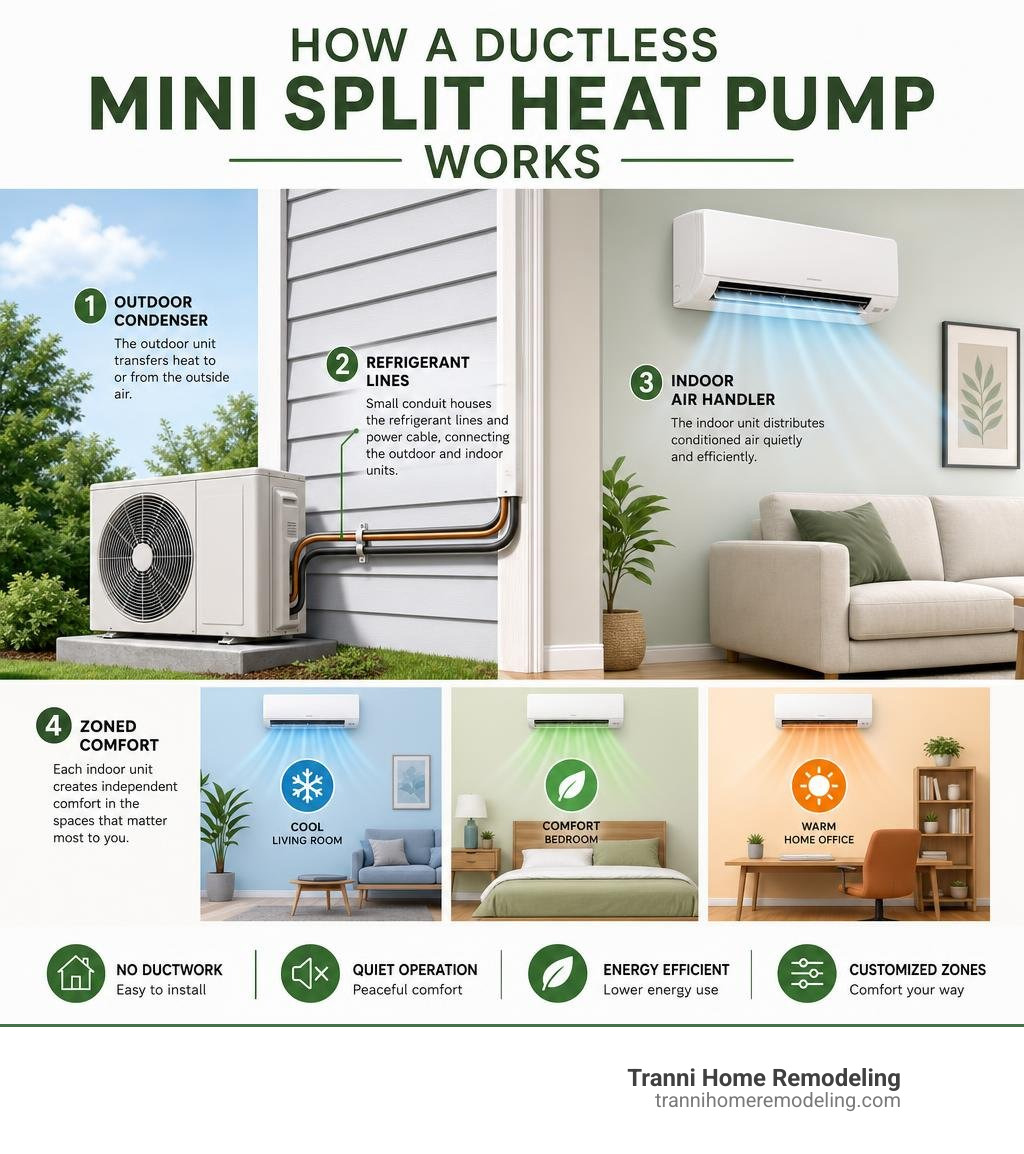
A standard setup consists of two primary parts:
- An outdoor condenser unit: This sits quietly in your yard or mounted to an exterior wall.
- One or more indoor air handlers: These are compact units mounted directly on your wall, floor, or ceiling.
These two parts are connected by a small conduit containing power cables, communication lines, and copper refrigerant lines. Because they don’t require bulky ductwork, they are incredibly flexible and cause minimal disruption to your home’s structure. If you are looking to cool or heat a single room, a Ductless Air Conditioner offers an elegant, compact alternative to noisy window units or invasive central air retrofits.
| Feature | Ductless Mini Split Systems | Traditional Central Air |
|---|---|---|
| Ductwork Required | None | Yes (extensive duct network) |
| Zoned Comfort | Yes (independent room control) | No (one thermostat controls all) |
| Energy Loss | Extremely low (<5% loss) | High (up to 30% loss from duct leaks) |
| Noise Level | Whisper quiet (20–30 dB indoor) | Moderate (loud clicking and rushing air) |
| Installation Time | 1 to 3 days (minimal disruption) | 1 to 2 weeks (requires opening walls) |
| Heating Capability | Yes (all-in-one heat pump) | No (requires separate furnace/boiler) |
By eliminating ducts, you also eliminate the energy losses associated with them. According to the U.S. Department of Energy, duct losses can account for more than 30% of your total heating and cooling energy consumption. Choosing Ductless Heating and Cooling Systems means you keep that energy—and those savings—inside your living space.
What is a Mini Split Heating and Cooling System?
At its core, a Mini Split Heating and Cooling System is a highly advanced heat pump. Unlike a traditional air conditioner that only cools, a Mini Split AC Heat Pump can reverse its operation.
In the summer, it absorbs heat from inside your home and dumps it outside. In the winter, it does the exact opposite: it extracts heat from the outdoor air (even when it is freezing outside) and pumps it indoors to warm your rooms.
This magic is made possible by two key technologies:
- Inverter-Driven Compressors: Traditional HVAC systems are either 100% “on” or 100% “off.” They blast cold air until the thermostat is satisfied, shut down, and then turn back on when the room warms up. This constant cycling wastes massive amounts of electricity. A Ductless Mini Split Air Conditioner uses an inverter compressor that acts more like a dimmer switch. It automatically adjusts its speed up or down to maintain a perfectly steady temperature, using only the exact amount of energy needed.
- Variable-Speed Indoor Fans: These fans adjust their airflow dynamically. They run continuously at very low speeds to keep air moving and filtering, preventing hot or cold spots from forming.
Key Differences from Traditional Ducted HVAC
The most obvious difference is the absolute lack of ductwork, but the practical daily benefits go far deeper.
First, consider the noise. Traditional central systems make their presence known with a loud rattle when the fan kicks on, followed by the sound of rushing air through registers. Indoor mini-split air handlers, on the other hand, operate at 20 to 30 decibels. To put that in perspective, a whisper is about 30 decibels. They are so quiet you will likely forget they are even running.
Second, think about zoning. In a central air system, if your upstairs bedroom is boiling but your downstairs living room is freezing, you have very few options. You either freeze downstairs to make upstairs tolerable, or you sweat upstairs to save on your utility bill.
With a system designed around the principles in our Ductless Mini Split Complete Guide, every single room has its own dedicated thermostat. If you want your bedroom at 68°F for sleeping, but your home office at 72°F during the day, you can set them independently. You can even turn off units in unoccupied guest rooms entirely, saving you money on your monthly energy bills. This allows local homes to be easily upgraded to zoned comfort.
Why Choose Mini Split Installation Middlesex County Homes?
Middlesex County, Massachusetts is famous for its rich history, beautiful historic town centers, and classic architecture. From the gorgeous Colonial and Victorian homes in Concord and Lexington to the classic Cape-style houses in Billerica and Wilmington, our local housing stock has incredible character.
However, these historic designs present a major challenge for modern comfort: they were built long before central air conditioning existed.
Many of these homes rely on hot water radiators, steam boilers, or electric baseboard heat. They do not have the ductwork required for traditional central AC. Retrofitting a 100-year-old home with central ductwork is a nightmare. It requires dropping ceilings, sacrificing precious closet space, and building bulky drywall soffits that ruin the historical charm of your rooms.
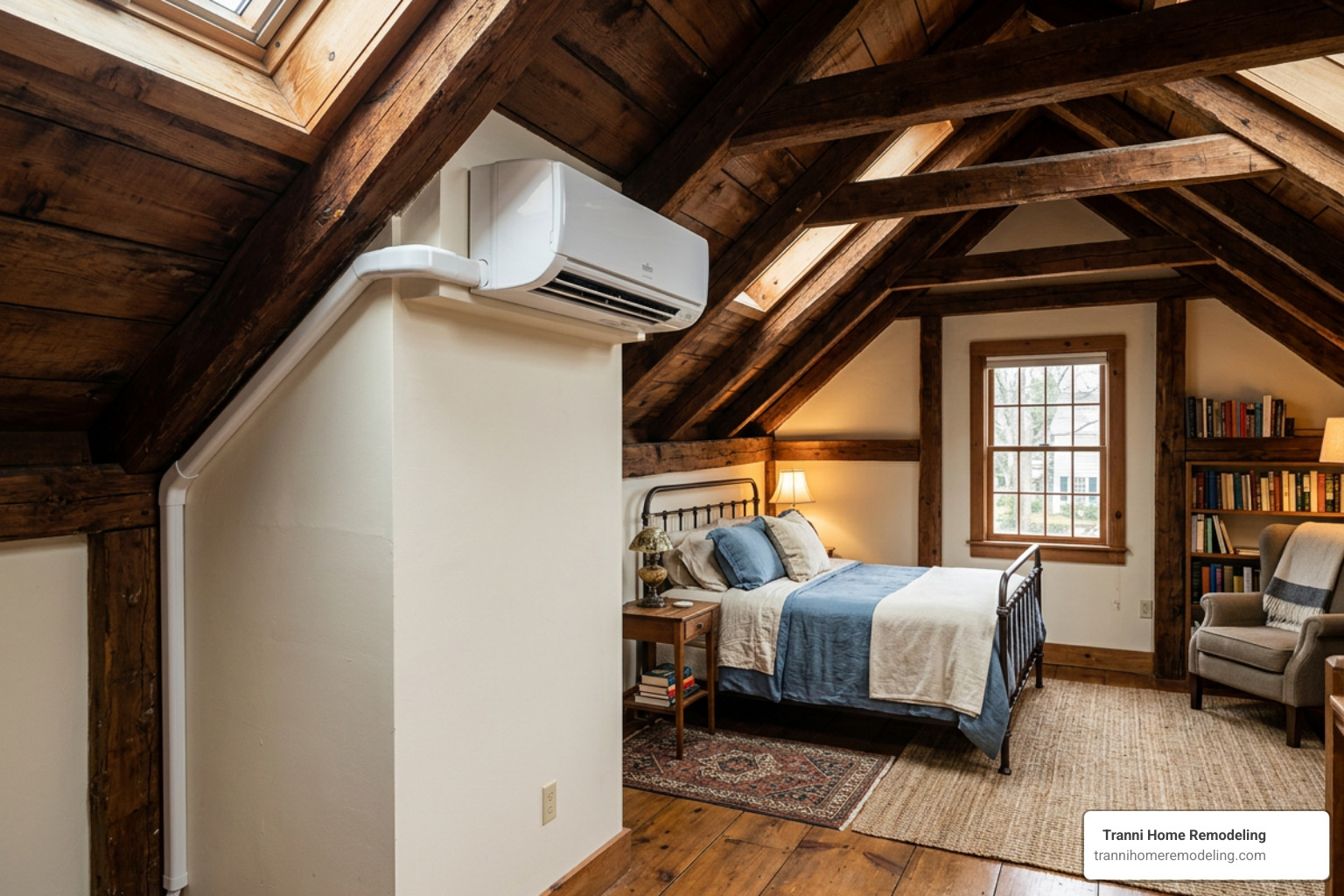
This is why mini split installation in Middlesex County is such a popular choice. We can run the thin refrigerant lines through closets, behind walls, or along the exterior of your home, preserving your home’s architectural integrity.
Whether you are planning a complete historic restoration or just updating a single room, our team can help integrate these systems seamlessly. You can learn more about our local approach by exploring HVAC Installation Middlesex County or reading our guide on how Cool Comfort Awaits Seamless HVAC Installation in Middlesex County.
Planning Your Mini Split Installation Middlesex County Project
A successful installation does not start with a drill; it starts with careful planning. One of the most common mistakes we see is improper sizing. If a unit is too small, it will run constantly and fail to keep you comfortable on humid July days. If it is too large, it will cool the room too quickly without running long enough to pull moisture out of the air, leaving you with a cold, clammy space.
To avoid this, we perform a detailed Manual J load calculation. This scientific assessment takes several critical factors into account:
- Exact Square Footage: We measure the height, width, and length of every room.
- Insulation Values: We evaluate the walls, ceilings, and floors. Older homes in Billerica might have drafty plaster walls, while newer additions in Burlington might have high-efficiency spray foam.
- Window Exposure: We look at the size, type, and direction of your windows. Large, south-facing windows let in massive amounts of solar heat in the summer.
- Room Usage and Occupancy: A kitchen with a hot stove or a home gym requires more cooling capacity than a quiet guest bedroom.
Once we have these numbers, we help you choose the ideal equipment and layout. If you are ready to explore your options, you can dive into the details of Mini Split AC Installation and Ductless AC Installation. For a deep dive into how we handle these projects in specific neighborhoods, check out our guide on Everything You Need to Know About Ductless AC in Burlington.
What to Expect During Mini Split Installation Middlesex County
One of the best things about going ductless is how fast and clean the installation process is. Unlike central air installations that can turn your home into a construction zone for weeks, a typical single-zone mini split installation is completed in just one workday (usually 4 to 8 hours). Even complex multi-zone systems rarely take more than two to three days.
Here is what our step-by-step process looks like:
- Site Preparation: We map out the exact paths for the lines and protect your floors and furniture. We ensure there is a clear 6-to-10-foot working path near the indoor and outdoor installation locations.
- Wall Penetration: We drill a single, small 3-inch hole through the exterior wall. This hole is heavily insulated and sealed to prevent drafts, water, or pests from getting in.
- Indoor Mounting: We install the mounting bracket and secure the indoor air handler.
- Outdoor Condenser Placement: We mount the outdoor unit on a heavy-duty, level plastic pad or secure it to your home’s foundation with sturdy steel wall brackets to keep it clear of winter snow accumulation.
- Refrigerant & Electrical Line Connections: We run the copper lines, control wiring, and condensate drain lines through the wall hole, protecting them on the exterior with a neat, paintable protective cover (often called “line hide”) that matches your siding.
- Electrical Connections & Permitting: We run a dedicated electrical circuit from your main breaker panel to the outdoor disconnect box.
- Pressure Testing and Vacuum: We use specialized tools to pull a deep vacuum on the refrigerant lines, ensuring there are absolutely no leaks or moisture in the system before releasing the refrigerant.
- Startup and Walkthrough: We power on the system, test all modes, and walk you through how to use your new remote control or smart thermostat.
Because we operate under strict local guidelines, we ensure all necessary electrical and mechanical permits are pulled with your local town hall—whether that is in Billerica, Chelmsford, or Burlington. This ensures a seamless system setup that meets all professional installation standards.
Types of Ductless Systems and Configuration Options
Ductless technology has come a long way. Today, you are not limited to just one style of indoor unit. Depending on your home’s layout, aesthetic preferences, and budget, you can mix and match different styles to create the perfect system.
Before choosing, it helps to understand the different options available on the market. You can explore a detailed comparison in our resource: A Comprehensive Guide to Comparing Mini Split Heating Units.
Single-Zone vs. Multi-Zone Setups
The first big design decision is choosing between a single-zone or multi-zone configuration:
- Single-Zone Systems: These consist of one outdoor condenser connected to one indoor air handler. They are perfect for targeted comfort problems. If you have a finished attic that gets unbearably hot in the summer, or a new sunroom addition that your central system cannot reach, a single-zone Mini Split AC Unit or Mini Split Heat Pump is the most cost-effective and efficient solution.
- Multi-Zone Systems: These feature a larger, more powerful outdoor condenser that can power up to five or six indoor air handlers. Each indoor unit is controlled by its own thermostat. This allows you to create independent comfort zones throughout your entire house. You can keep your bedrooms cool at night while leaving the downstairs units in energy-saving mode.
Wall-Mounted, Ceiling Cassette, and Floor-Mounted Units
Once you know how many zones you need, you can choose the style of indoor air handlers that best fit your rooms:
- Wall-Mounted Units: This is the most common and cost-effective style. They are mounted high on an exterior wall, allowing them to distribute air evenly across the room. Modern units are sleek, compact, and designed to blend quietly into the background.
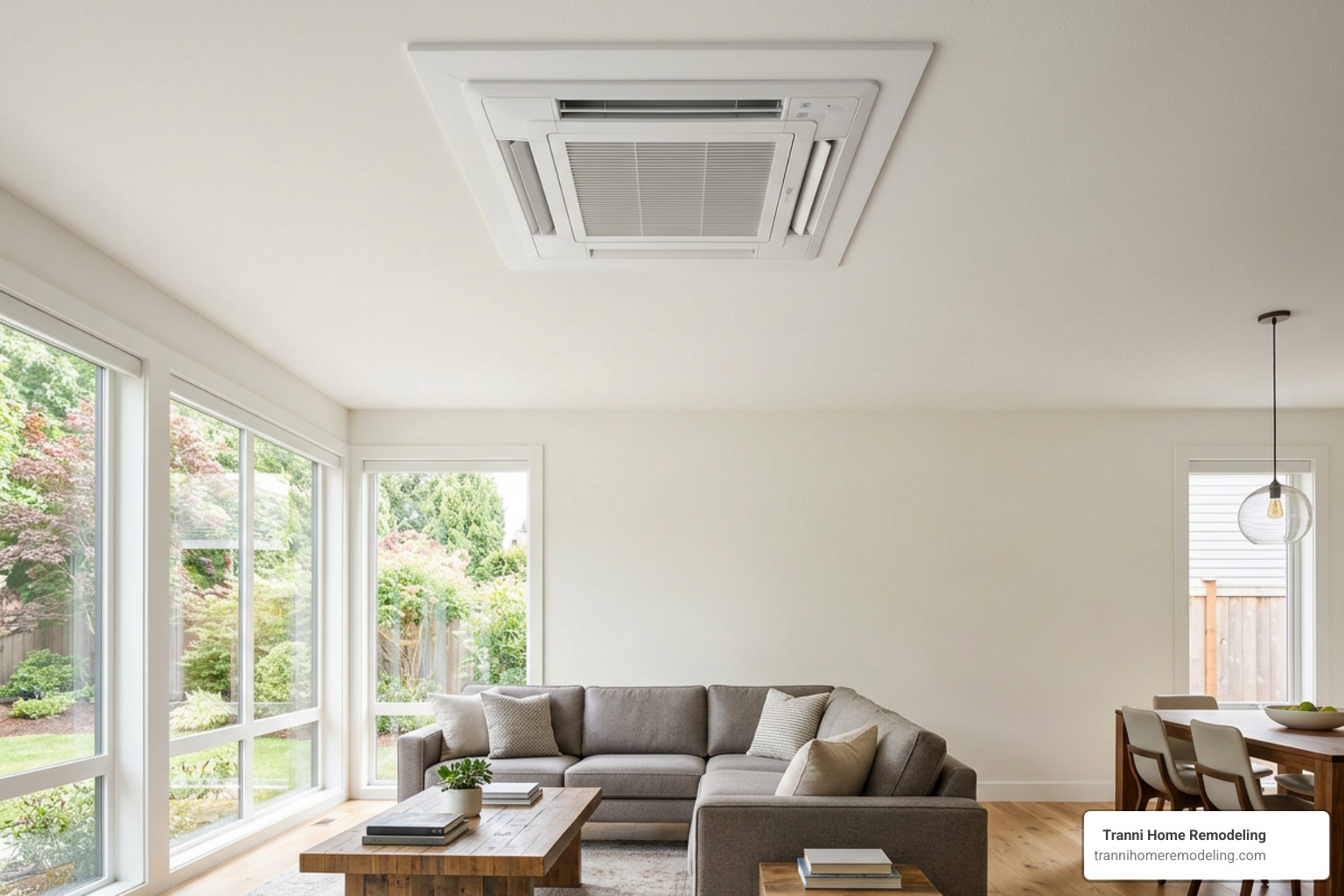
- Ceiling Cassettes: If you prefer a completely hidden look, ceiling cassettes are installed flush with your ceiling. Only a thin, decorative grille is visible. They distribute air in four directions, making them fantastic for large, open-concept living rooms or kitchens.
- Floor-Mounted Units: These are installed low on the wall, resting near the floor—very similar to a traditional radiator. They are ideal for attic rooms with low, sloped ceilings, or for homeowners who prefer not to have units mounted at eye level. They are also exceptionally good at heating, as they deliver warm air right at floor level where it can rise naturally.
For homeowners who want the absolute best in efficiency and performance, we highly recommend looking into industry leaders like Mitsubishi Electric. You can find comprehensive details in our Mitsubishi Ductless AC Contractor Guide and learn about the advanced inverter technology behind the Mitsubishi Ductless AC System.
Cost, Rebates, and Maintenance for Middlesex County Residents
When planning a home upgrade, understanding the financial side is key. We believe in complete transparency.
To help you budget, we’ve broken down the average costs, available local rebates, and long-term maintenance requirements below. For a comprehensive overview of budgeting, check out our Mini Split Installation Cost Guide and our Mini Split Installation Complete Guide.
Average Pricing and Financial Incentives
Please note: The pricing ranges listed below are average estimated costs based on general internet data. They do not represent actual project quotes or pricing for Tranni Home Remodeling. Every home is unique, and actual costs depend on your specific electrical panel capacity, line run lengths, and equipment choices.
Ductless installations vary widely in cost depending on the number of zones and the complexity of the installation:
- Single-Zone Installations: Typically range from $3,000 to $5,500+. This is ideal for a single room, office, or attic space.
- Multi-Zone Installations: Range from $5,500 to over $15,000+ for whole-home setups (3 to 5 zones).
Because New Massachusetts energy standards heavily favor efficient heat pumps, there are incredible financial incentives available to help offset these costs.
Through the Mass Save program, Massachusetts homeowners can qualify for substantial rebates:
- Whole-Home Heat Pump Rebates: Up to $10,000 back when you transition your entire home to heat pumps as your primary source of heating.
- Partial-Home Rebates: Rebates are also available on a per-ton basis if you are installing mini splits to supplement your existing system.
- 0% Interest Financing: Mass Save offers the Heat Loan program, providing 0% interest financing up to $25,000 for qualifying energy-efficiency upgrades.
- Federal Tax Credits: Under the Inflation Reduction Act, you may also qualify for federal tax credits of up to 30% of the installation cost (up to $2,000) for qualifying high-efficiency heat pumps.
To see how these programs are utilized locally, you can explore our local guides, which highlight how local residents maximize their savings through state-backed programs.
Long-Term Maintenance and Winter Performance
To protect your investment and keep your system running at peak efficiency for 15 to 20 years, simple routine maintenance is essential.
Fortunately, most of this is incredibly easy:
- Clean the Filters Monthly: Each indoor unit contains a reusable mesh air filter. All you have to do is pop open the front panel, slide the filters out, rinse them in the sink, let them dry, and slide them back in. This takes about five minutes and keeps your airflow strong and your indoor air clean.
- Keep the Outdoor Unit Clear: In the winter, make sure snow and ice do not accumulate around or on top of your outdoor condenser. In the summer, keep weeds, shrubs, and leaves trimmed back at least two feet to ensure proper airflow.
- Schedule Annual Professional Tune-Ups: Once a year, have a professional technician inspect the refrigerant levels, clean the deep evaporator and condenser coils, and check the condensate drain lines to prevent leaks.
A common concern among local homeowners is whether these systems can handle our freezing New England winters. The short answer is yes! Modern cold-climate heat pumps are designed specifically for northern climates. Thanks to advanced hyper-heating technology, they can deliver 100% heating capacity at temperatures well below zero. You can read a complete breakdown of winter performance in our guide: Are Mini Split Systems Good for Heating?.
Frequently Asked Questions about Ductless HVAC
Here are some of the most common questions we hear from homeowners in Billerica, Burlington, and surrounding Middlesex County towns.
Do mini splits work well in cold Massachusetts winters?
Yes, absolutely! While older heat pumps from decades ago struggled when the temperature dropped below freezing, modern cold-climate mini splits are incredibly powerful. Many systems are rated to provide efficient, reliable heat down to -15°F and beyond. They are highly effective as primary heat sources in our area.
How much maintenance do ductless systems require?
Very little compared to central HVAC. Your main job is to rinse the indoor mesh filters once a month to keep airflow clean and strong. Beyond that, we recommend a professional inspection once a year to clean the coils, check the electrical connections, and make sure the condensate drains are clear. With this basic care, a quality system will easily last 15 to 20 years.
Can I install a mini split system myself?
We strongly advise against DIY mini split installation. While you can buy DIY kits online, installing them legally and safely requires highly specialized skills.
You must handle high-voltage electrical wiring, drill precise holes through your home’s exterior, and—most importantly—properly handle chemical refrigerants. Federal law requires an EPA Section 608 certification to purchase and handle refrigerant. Furthermore, most major manufacturers will completely void your equipment warranty if the system is not installed by a licensed HVAC professional. To learn more about the complexities of installation, check out our guide: Cracking the Code How to Install a Mini Split Without Losing Your Cool.
Conclusion
Upgrading your home’s heating and cooling system is one of the smartest investments you can make. Whether you are building a new addition, converting a drafty attic, or finally upgrading an older home that lacks ductwork, a ductless mini split system offers unmatched comfort, whisper-quiet operation, and incredible energy savings.
At Tranni Home Remodeling, based right here in Billerica, MA, we specialize in high-quality home transformations. From home additions and basement finishing to complete kitchen and bathroom remodeling, our team is dedicated to outstanding service and high-quality craftsmanship. We serve homeowners across Middlesex County, including Andover, Bedford, Burlington, Chelmsford, Concord, and surrounding towns.
If you are ready to stop sweating through humid summers and shivering through freezing winters, let’s talk. We can help you design a system that fits your home perfectly and guide you through the process from start to finish.
Schedule a Consultation with Tranni Home Remodeling today, and let’s start planning your dream space!
Like us on Facebook!