





Built In China Cabinet Ideas That Transform Any Room
If you’re exploring built in china cabinet ideas, here are the most popular options to consider:
- Classic glass-front display cabinet — framed with crown molding, built flush into the dining room wall
- Craftsman-style cabinet — flat-panel doors, clean lines, painted or stained wood
- Kitchen butler’s pantry cabinet — glass uppers, closed base storage, integrated into cabinetry run
- Corner built-in — maximizes awkward spaces in small dining rooms
- Floor-to-ceiling display cabinet — dramatic focal point with LED interior lighting
- Flanking fireplace cabinets — symmetrical built-ins on either side of a mantel
- Transitional shaker-style cabinet — reeded or seeded glass doors, soft-close hardware
These styles work across traditional, modern, and craftsman homes — and each can be fully customized to fit your space.
There’s something different about a built-in china cabinet compared to a piece of furniture you simply place against a wall. It doesn’t just store things — it becomes part of the room. With over 1.4 million photos tagged on Houzz alone, it’s clear that homeowners are hungry for this kind of design detail. And it’s easy to see why: a well-designed built-in feels like it was always there, like the house was built around it.
But getting it right takes more than picking a style you like online. The depth, the lighting, the glass, the molding — every decision matters. Whether you’re working with a tight dining room in a Billerica colonial or a sprawling kitchen that needs better organization, the right built-in can completely change how a space feels.
I’m Tyler Tranni, owner of Tranni Home Remodeling in Billerica, MA, and we have helped countless homeowners in the area bring their built in china cabinet ideas to life through custom carpentry and full kitchen and dining room remodels. In the sections below, we’ll walk you through everything you need to know — from design styles and materials to planning, costs, and what to ask your contractor.
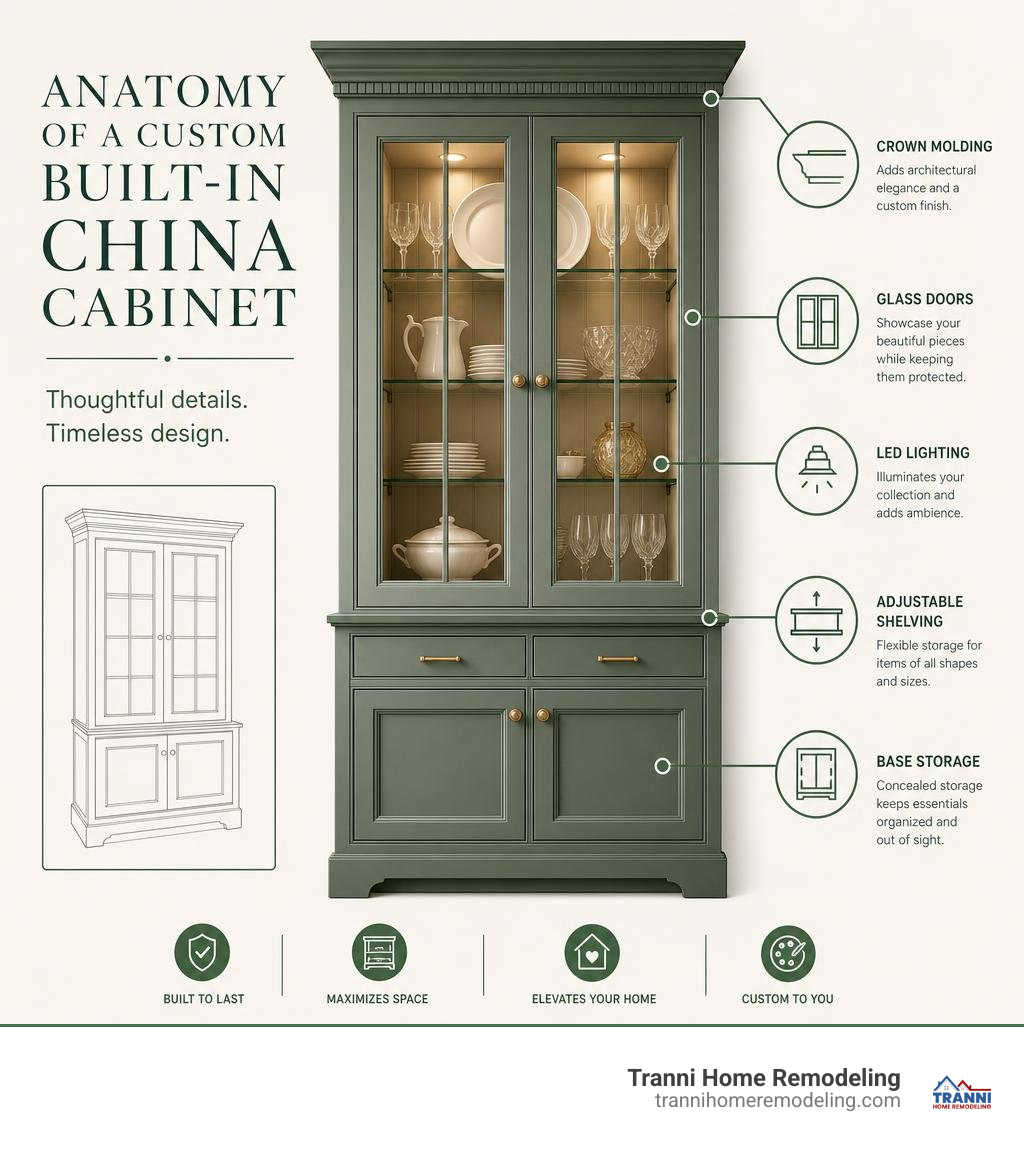
Built in china cabinet ideas vocabulary:
Why Choose a Built-In Over Freestanding Cabinet?
When homeowners in towns like Billerica or Wilmington ask us whether they should buy a freestanding hutch or invest in a custom built-in, we always look at the architecture of the home first. While a freestanding cabinet can be a beautiful piece of furniture, a built-in offers structural and aesthetic benefits that standalone pieces simply cannot match.
Space Optimization
A freestanding cabinet has a fixed footprint. If it is 60 inches wide and your wall is 88 inches wide, you are left with 14 inches of awkward, unusable “dead space” on either side. A built-in is designed to fit your wall perfectly, maximizing every single inch. In fact, custom built-ins can provide 20% to 30% more storage capacity than freestanding units without taking up any additional floor space. This is a game-changer for smaller dining rooms where walking clearance around the table is tight.
Seamless Architectural Integration
A built-in cabinet is designed to match the existing trim, crown molding, and baseboards of your home. By extending the cabinet all the way to the ceiling and wrapping it in matching woodwork, it becomes a permanent architectural feature. It looks intentional, high-end, and original to the property.
Dust Prevention
Anyone who owns a freestanding hutch knows the pain of cleaning the dust that accumulates on the top, behind, and underneath the unit. Built-ins are sealed flush against the walls and ceiling, meaning there are zero hard-to-reach gaps where dust bunnies can hide.
Increased Home Value
Because built-ins are permanent fixtures, they contribute directly to your home’s equity. Buyers in the Middlesex County real estate market love historic charm and smart storage solutions. A custom, beautifully crafted built-in is a luxury feature that makes your home stand out.
To help you decide which route is best for your home, here is a quick comparison:
| Feature | Built-In China Cabinet | Freestanding Hutch |
|---|---|---|
| Storage Efficiency | Excellent (uses 100% of allocated wall space) | Moderate (limited by fixed manufactured dimensions) |
| Visual Footprint | Streamlined and flush; makes rooms feel larger | Bulky; can crowd narrow walkways |
| Customization | Unlimited (lighting, glass, shelves, paint) | Extremely limited (what you see is what you get) |
| Dust Accumulation | Minimal (no gaps, top is sealed to ceiling) | High (collects dust on top, behind, and underneath) |
| Portability | Permanent (adds to home equity) | Highly portable (you can take it when you move) |
| Installation | Requires professional Fine Interior Carpentry | Plug-and-play (assembly may be required) |
Inspiring Built In China Cabinet Ideas for Kitchens and Dining Rooms
Where you place your built-in cabinet dictates how it should look and function. While a kitchen built-in is usually work-oriented and integrated with active prep spaces, a dining room built-in is designed to set a mood and showcase your finest collections.
To help you visualize how to make this work in your home, check out this stunning installation:
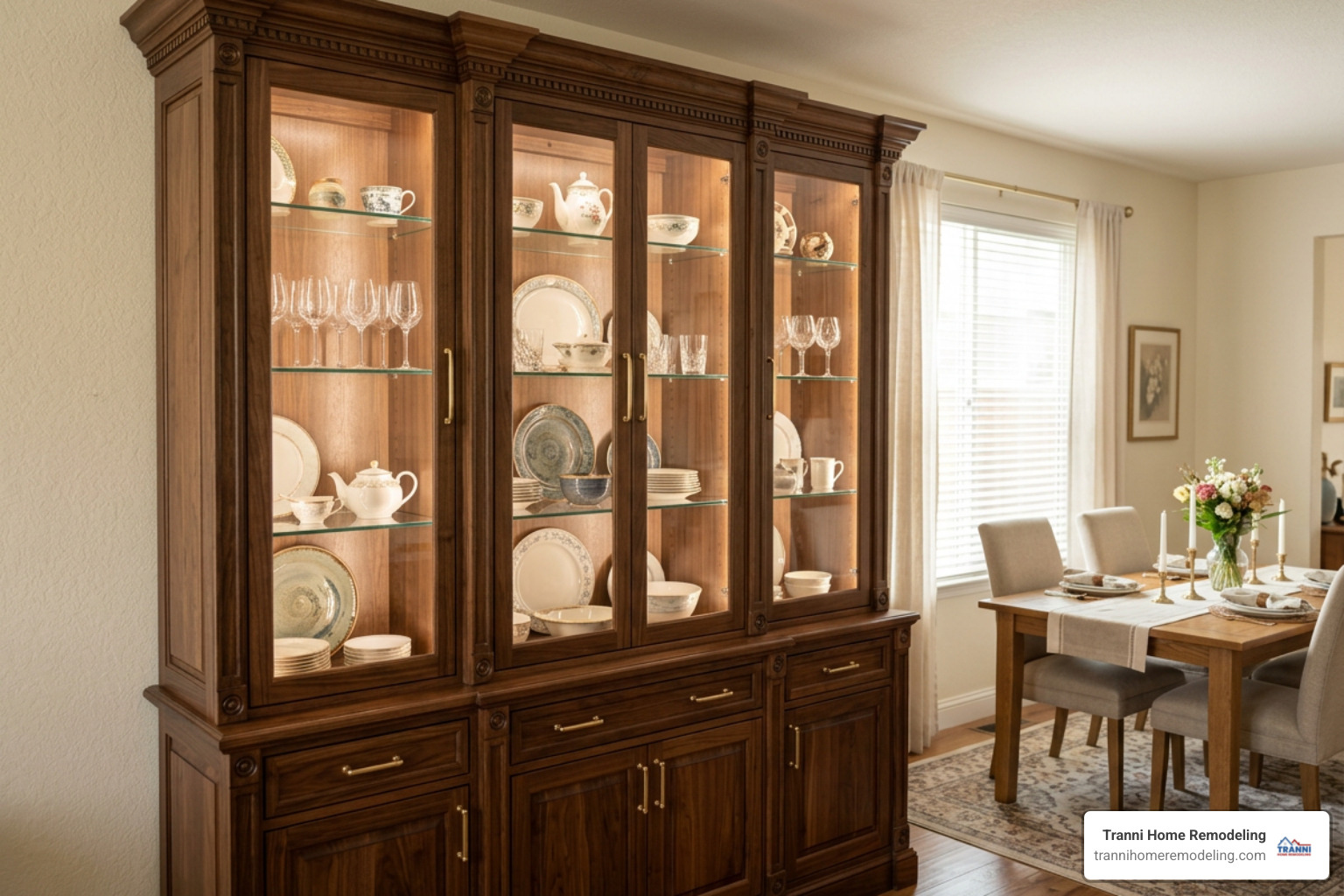
When planning, you can read more about how to balance these two spaces in this helpful guide on the Built-In China Cabinet — How to Make It Work in Your Kitchen or Dining.
Kitchen Built In China Cabinet Ideas for Culinary Spaces
In the kitchen, a built-in china cabinet often acts as a bridge between high-utility prep zones and elegant dining areas. It is the perfect addition to a butler’s pantry, a walk-through transition zone, or the end of a long cabinetry run.
In these spaces, durability and accessibility are key. You will want to position the cabinet away from high-heat cooking zones (like the range) to keep grease and moisture off the glass panels. Many homeowners choose to integrate their built-in with a wet bar, adding a small sink, a built-in microwave, or even a drawer for wine storage.
If you are redesigning your kitchen flow, make sure to consider your overall Kitchen Cabinet Layout to ensure the cabinet doesn’t block high-traffic walkways. You can also explore creative Pantry Cabinet Ideas to combine display shelving with hidden storage for dry goods.
Dining Room Built In China Cabinet Ideas for Elegant Entertaining
In a formal dining room, your built-in is the star of the show. It should act as an architectural focal point that anchors the entire room.
One of our favorite built in china cabinet ideas is to install symmetrical units flanking a central fireplace or a large window. This classic, balanced look brings instant historic character to newer homes and enhances the charm of older properties in towns like Billerica or Wilmington.
For dining room installations, we often design deep lower cabinets with solid wood doors to hide bulky serving platters, table linens, and seasonal decor, while keeping the upper cabinets shallower with ornate glass doors to display crystal, heirloom porcelain, and fine glassware. If you are looking for visual inspiration, you can browse through the 92 Best Built in China Cabinet ideas – Pinterest to see how different homeowners style their dining room built-ins.
Customizing, Planning, and Cost Considerations for Your Cabinet
Adding a built-in cabinet to your home is an investment in both beauty and functionality. Because it is a permanent addition, careful planning and precise measurements are absolutely critical.
Walls are rarely perfectly straight, and floors in older Middlesex County homes are notoriously sloped. A professional carpenter will build your cabinet with fillers and scribes, allowing the unit to sit perfectly plumb and level while seamlessly hugging the curves of your plaster walls. For a flawless finish, we always recommend hiring a professional for your Kitchen Cabinet Installation.
When it comes to budgeting, it is important to understand the typical cost ranges. Please note that the following prices are average costs based on internet data and not actual costs for Tranni Home Remodeling:
- Basic/Semi-Custom Painted Cabinets: A standard 8-foot section built using high-quality stock components and custom trim typically ranges from $2,000 to $4,500.
- Fully Custom Wood Cabinets: A completely bespoke cabinet made from premium hardwoods (like cherry or walnut) with integrated LED lighting, custom glass panels, and specialized storage drawers can range from $6,000 to $12,000 or more, depending on the size and complexity of the design.
Selecting Materials for Modern, Traditional, and Craftsman Styles
The materials you choose will define the architectural style of your cabinet.
- Traditional Style: If your home has a classic, romantic feel, opt for rich hardwoods like cherry or oak with inset cabinet doors, raised panels, and detailed crown molding.
- Craftsman Style: This style is all about celebrating natural wood grain, simple lines, and honest craftsmanship. Stained white oak or cherry with flat-panel Shaker doors works beautifully here.
- Modern Minimalist: For a sleek, contemporary look, choose painted finishes with slab doors and minimal hardware.
When deciding on materials, you will want to weigh the pros and cons of engineered wood versus solid hardwood. You can read our detailed breakdown in the MDF or Real Wood: The Ultimate Custom Cabinet Contractor Checklist. Additionally, if you have existing cabinetry that you want to match, you can explore your options in our guide to Give Your Kitchen Cabinets a Fresh Look: Refurbishing Options.
Elevating the Design with Glass, Lighting, and Hardware
The magic of a built-in china cabinet is in the details. This is where you can truly show off your personal style.
- Glass Options: While clear glass is classic, you can add texture and interest by choosing seeded glass, reeded glass, or even water glass. Water glass is particularly wonderful because its wavy texture catches the light beautifully while slightly obscuring the contents inside—meaning you don’t have to keep your shelves perfectly organized 24/7!
- Interior Lighting: Lighting is what turns a simple cabinet into a dramatic display. We highly recommend installing low-voltage LED puck lights or vertical LED strip lights recessed into the cabinet face frames. For a warm, inviting glow that mimics candlelight, choose a warm light temperature of 2700K.
- Custom Hardware: Think of hardware as the jewelry of your cabinet. Brass, oil-rubbed bronze, or matte black pulls and latches can completely change the vibe of the unit.
To ensure your woodwork is executed to perfection, it helps to work with specialists. You can search for Custom Woodworking Near Me or read our guide on Mastering the Details: Your Guide to Finish Custom Carpentry to learn more about the craftsmanship that goes into these details.
Frequently Asked Questions about Built-In China Cabinets
What is the ideal depth for a built-in cabinet?
The ideal depth depends entirely on what you plan to store and where the cabinet is located.
- For Display-Only (Upper Cabinets): A depth of 12 to 14 inches is perfect. It is deep enough to hold standard dinner plates and wine glasses without protruding too far into the room. If you are working with a tight space, you can learn more about maximizing shallow storage in our article on How to Maximize Space with a 12-Inch Deep Pantry Cabinet.
- For Heavy Storage (Lower Cabinets): A depth of 16 to 18 inches is ideal for storing large serving platters, tureen bowls, and bulky kitchen appliances. We advise against exceeding 24 inches in depth, as items stored in the very back will inevitably get lost and forgotten.
How do you style and organize a china cabinet effectively?
Styling a glass-front cabinet is an art form. The goal is to make it look curated, not cluttered. Here are our favorite designer tips:
- The Rule of Thirds: Group your items in clusters of three, varying the heights of the objects within each group (for example: a tall pitcher, a medium bowl, and a small stack of teacups).
- Embrace Negative Space: Leave about 30% of each shelf empty. This “breathing room” allows the eye to rest and makes the displayed items look more valuable and intentional.
- Go for Stacked Displays: Instead of standing every plate upright on a rail, mix it up. Create casual, neat stacks of dinner plates and place bowls on top. This gives the cabinet a cozy, functional, “butler’s pantry” feel.
How do you maintain and care for custom built-in cabinetry?
To keep your custom woodwork looking brand new for decades in our local climate, follow these simple maintenance tips:
- Protect from UV Rays: Direct sunlight can fade stained wood and discolor painted finishes over time. It can also damage delicate heirloom porcelain. Position your cabinet away from direct sunlight, or apply a UV-protective film to nearby windows.
- Clean Glass Safely: Spray glass cleaner onto a microfiber cloth rather than directly onto the glass panels. This prevents the cleaner from dripping down and seeping into the surrounding wood trim, which can ruin the finish.
- Gentle Wood Care: Dust the wood surfaces weekly with a dry microstatic cloth. Avoid harsh chemical sprays or silicone-based polishes, which can leave a sticky residue that attracts dust.
Conclusion
A custom built-in china cabinet is more than just a storage solution — it is an investment in your home’s character, functionality, and long-term value. Whether you want to showcase your family’s vintage crystal in a formal Billerica dining room or add a highly functional butler’s pantry to your open-concept Wilmington kitchen, the right design will completely transform your living space.
At Tranni Home Remodeling, we take pride in delivering the highest quality craftsmanship and personalized service to homeowners across Billerica, Wilmington, and the surrounding Middlesex County towns. From the initial measurement to the final coat of paint, we work closely with you to ensure your vision is brought to life with precision and care.
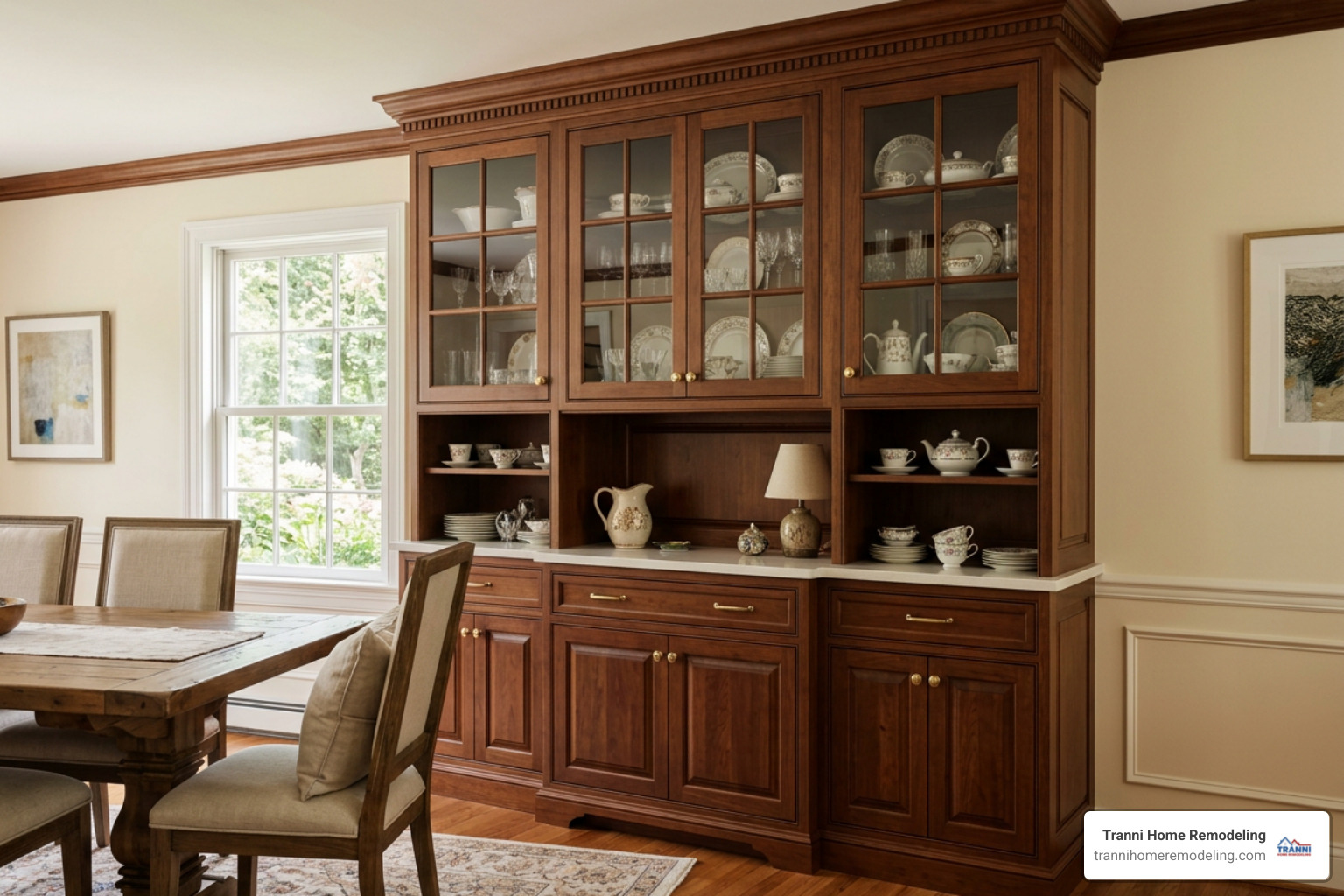
Ready to start planning your dream built-in? Explore our Kitchen Remodeling Services or contact us today to schedule your custom carpentry consultation!
